
Introduction
Mera Peak Climbing is an exciting Himalayan adventure that combines remote trekking, high-altitude wilderness, and the challenge of reaching one of Nepal’s most impressive trekking peaks. Rising to approximately 6,476 meters, Mera Peak is widely recognized as one of the highest trekking peaks in Nepal. Its spectacular location in the Mahalangur section of the Himalayas provides climbers with breathtaking views of Everest, Lhotse, Makalu, Baruntse, and other remarkable Himalayan mountains.
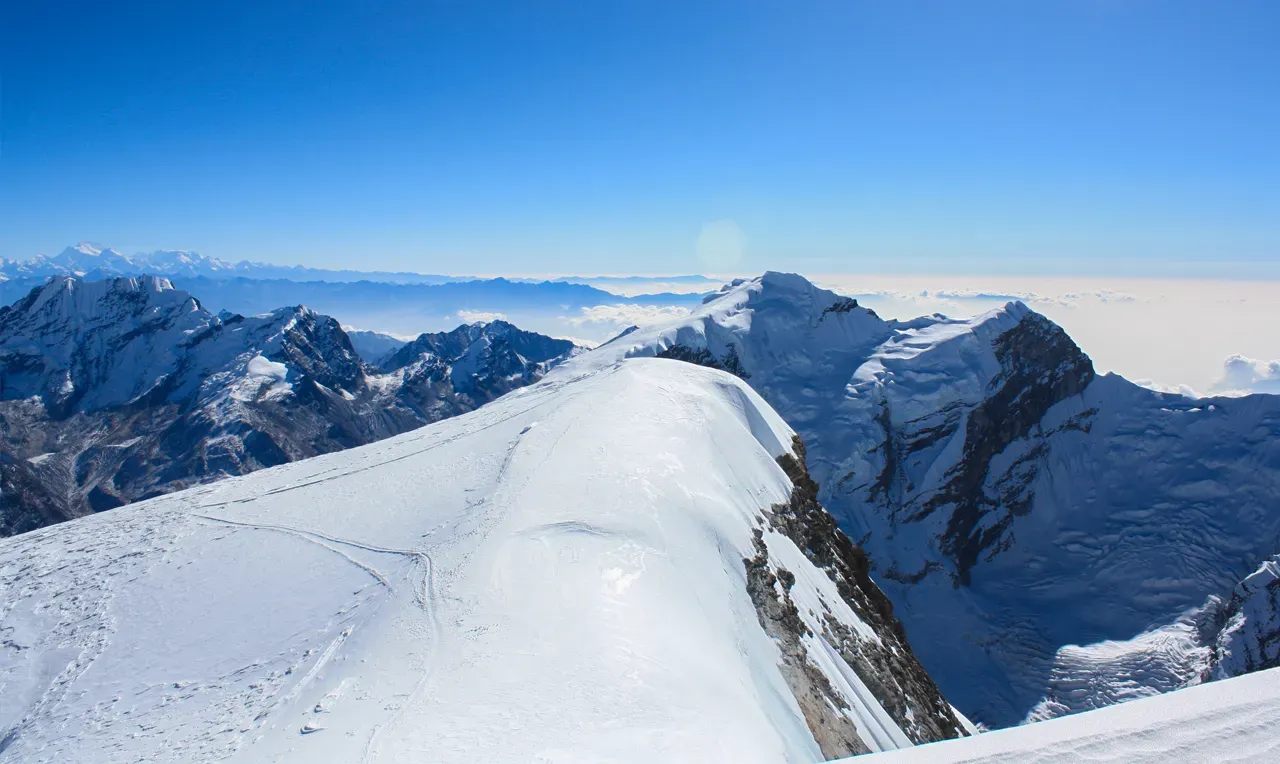
Unlike a conventional trek, a Mera Peak expedition requires both physical endurance and basic mountaineering skills. The journey involves walking through remote valleys, crossing high mountain terrain, acclimatizing at increasing elevations, and eventually climbing snow and ice toward the summit.
Despite its altitude, Mera Peak is often selected by climbers looking for an introduction to Himalayan peak climbing. However, the mountain should not be underestimated. High-altitude conditions, cold temperatures, steep terrain, and unpredictable weather make proper preparation essential.
With a well-planned itinerary, experienced climbing guides, appropriate equipment, and sufficient acclimatization, Mera Peak Climbing can provide a memorable and rewarding Himalayan experience.
Where Is Mera Peak?
Mera Peak is situated in the eastern part of Nepal, within the Everest region. It lies south of Mount Everest and is surrounded by some of the country’s most spectacular Himalayan landscapes.
The mountain is part of the Mahalangur Himalayan range and is located in a relatively remote area compared with the main Everest Base Camp route.
The approach to Mera Peak passes through beautiful forests, high-altitude valleys, traditional mountain settlements, and remote Sherpa communities. The changing scenery is one of the major attractions of the expedition.
From higher sections of the route, climbers can enjoy views of numerous major peaks, making the journey as visually rewarding as the summit itself.
Why Choose Mera Peak Climbing?
There are several reasons why adventurers choose Mera Peak Climbing.
One of the most important is the opportunity to experience Himalayan mountaineering without committing to an expedition on one of the world’s highest and most technically demanding mountains.
Mera Peak provides a combination of trekking and climbing. The approach includes long days of hiking through remote landscapes, while the summit section introduces climbers to glacier travel, crampon use, rope techniques, and steep snow climbing.
Another major attraction is the scenery. The summit and surrounding ridges offer extensive views toward Everest, Lhotse, Makalu, Cho Oyu, Baruntse, and other Himalayan peaks when weather conditions are favorable.
The region is also culturally fascinating. Sherpa villages, Buddhist monasteries, prayer flags, chortens, and traditional mountain lifestyles are important parts of the journey.
Major Highlights of Mera Peak Climbing
A well-organized Mera Peak Climbing expedition can include numerous memorable highlights:
-
Reaching the summit of a 6,000-meter Himalayan peak
-
Trekking through remote valleys of the Everest region
-
Exploring traditional Sherpa settlements
-
Visiting Buddhist monasteries and cultural sites
-
Walking through rhododendron, pine, and alpine forests
-
Experiencing dramatic high-altitude landscapes
-
Learning and practicing basic mountaineering techniques
-
Enjoying panoramic views of Everest, Lhotse, Makalu, and other peaks
-
Camping in remote mountain environments
-
Experiencing the unique atmosphere of the Himalayan wilderness
The combination of cultural trekking and mountaineering makes the expedition particularly appealing to adventure travelers.
Mera Peak Climbing Route
The route can vary depending on the itinerary and starting point. Many expeditions begin with travel from Kathmandu toward the eastern Khumbu region.
A common approach involves reaching a lower-altitude trailhead and trekking through forested valleys toward the Mera Peak region. Compared with the standard Everest Base Camp route, some approach routes provide a quieter and more remote trekking experience.
The trail gradually climbs through traditional settlements and highland terrain. As the elevation increases, forests become thinner and eventually give way to alpine landscapes.
The route generally includes acclimatization and preparation days before reaching Mera Peak Base Camp. From base camp, climbers continue toward higher camps according to the chosen expedition strategy.
A summit attempt usually begins very early in the morning. Climbers ascend through snow and glacier terrain toward the summit ridge. After reaching the summit, they descend carefully to a lower camp before continuing the return journey.
Difficulty of Mera Peak Climbing
Mera Peak Climbing is physically demanding and should be approached as a serious high-altitude mountaineering expedition.
Although the mountain is often categorized as a trekking peak, the altitude itself presents a major challenge. At approximately 6,476 meters, the summit environment has significantly less available oxygen than at sea level.
The expedition also involves long walking days, steep ascents, cold temperatures, snow, and potentially challenging weather.
Climbers do not necessarily need extensive technical mountaineering experience, but basic knowledge of glacier travel and climbing equipment is highly beneficial.
A good level of fitness is essential. Travelers should prepare several weeks or months in advance through hiking, running, cycling, stair climbing, and strength training.
Physical Preparation
Physical preparation is one of the most important aspects of a successful Mera Peak Climbing expedition.
Cardiovascular endurance can be developed through running, cycling, swimming, brisk walking, or stair climbing. Long-distance hiking is particularly useful because the actual expedition involves multiple consecutive days of walking.
Strength training should focus on the legs, core, and upper body. Squats, lunges, step-ups, and other functional exercises can help prepare the body for steep terrain.
It is also useful to practice hiking with a backpack. This allows climbers to understand how their bodies respond to carrying equipment over extended periods.
Technical preparation should include learning how to use crampons, an ice axe, harnesses, ropes, and other climbing equipment. Professional guides generally provide instruction, but prior practice can increase confidence.
Altitude and Acclimatization
Altitude is one of the greatest challenges associated with Mera Peak Climbing.
The body needs time to adapt as the trail climbs higher. A responsible itinerary therefore includes gradual elevation gain and acclimatization periods.
Altitude-related symptoms can include headache, nausea, dizziness, fatigue, and sleep difficulties. More severe symptoms can become dangerous and require immediate descent.
Climbers should communicate openly with their guides if they experience unusual symptoms. Reaching the summit is secondary to maintaining health and safety.
Adequate hydration, nutritious meals, proper rest, and a controlled walking pace can support acclimatization. Climbers should also avoid unnecessarily rapid ascents.
Best Time for Mera Peak Climbing
The best seasons for Mera Peak Climbing are generally spring and autumn.
Spring, from March to May, offers relatively stable weather and gradually warming temperatures. Mountain views can be excellent, and the lower trekking areas may have colorful rhododendron blooms.
Autumn, from September to November, is another popular period. Following the monsoon, the atmosphere is often clear, offering excellent visibility of the surrounding Himalayan peaks.
Winter brings very cold temperatures, heavy snow, and challenging conditions at higher elevations. While experienced climbers may undertake winter expeditions, conditions require additional preparation.
Summer coincides with the monsoon season in Nepal. Rainfall can affect lower trekking trails and transportation, while cloud cover may reduce mountain visibility.
Even during the best seasons, Himalayan weather can change rapidly, so summit decisions should depend on current conditions and professional guidance.
Climbing Equipment
Proper equipment is essential for a safe and comfortable Mera Peak Climbing expedition.
Important equipment may include:
-
Mountaineering boots suitable for snow and ice
-
Crampons
-
Ice axe
-
Climbing harness
-
Helmet
-
Carabiners and appropriate climbing hardware
-
Ascender or related rope equipment
-
Down or insulated jacket
-
Thermal base layers
-
Waterproof and windproof outer layers
-
Warm gloves and socks
-
Mountaineering sunglasses or goggles
-
Headlamp with spare batteries
-
Sleeping bag suitable for extreme cold
-
Trekking poles
-
Backpack and daypack
-
Water bottles or hydration system
-
Personal first-aid supplies
The exact equipment list depends on the season, route, climbing company, and current mountain conditions. Professional operators can provide guidance about which items should be rented or purchased.
Accommodation and Food
During the trekking approach, climbers generally stay in local teahouses or lodges where available. Facilities become increasingly basic as the route moves into remote areas.
Higher camps may require organized camping arrangements, including tents, sleeping systems, and kitchen support.
Meals during the trekking section often include dal bhat, rice, vegetables, noodles, soups, potatoes, pasta, and other simple dishes.
At high altitude, adequate nutrition is particularly important. The body uses more energy in cold conditions, so climbers should maintain regular food intake.
High-energy snacks such as nuts, dried fruit, chocolate, energy bars, and other lightweight foods are useful during long climbing days.
Permits and Professional Guides
Mera Peak is a regulated climbing destination, and climbers need the relevant permits and documentation. Requirements, fees, and regulations can change, so current information should be confirmed before departure.
Professional guides are strongly recommended for Mera Peak Climbing. Experienced climbing staff can provide technical instruction, route management, altitude monitoring, weather assessment, and emergency support.
A reputable expedition operator can also coordinate transportation, accommodation, porters, permits, meals, climbing equipment, and other logistics.
Travel insurance should specifically cover high-altitude trekking and mountaineering. Climbers should verify that the policy provides suitable coverage for emergency evacuation and the maximum elevation of the expedition.
Safety on Mera Peak
Safety should always be the highest priority during the expedition.
Weather conditions can change quickly, particularly near the summit. Strong winds, snowfall, low temperatures, and poor visibility can make climbing significantly more difficult.
Climbers should follow the recommendations of their guides and remain flexible with the schedule. A summit attempt may need to be delayed or canceled when conditions are unsafe.
Proper hydration, acclimatization, communication, and equipment checks are equally important.
Climbers should also understand that summit success is never guaranteed. Mountain conditions and individual health can change unexpectedly, and responsible decisions are essential.
Responsible Mountaineering
Mera Peak lies within a fragile Himalayan environment, so responsible tourism is essential.
Climbers should avoid littering and follow waste-management guidelines at camps and along the trail. Single-use plastics should be minimized wherever possible.
Respecting local communities is equally important. Travelers should behave appropriately around monasteries, religious monuments, prayer flags, and traditional villages.
Hiring local guides and porters and using locally operated accommodation can help ensure that tourism provides economic benefits to communities in the region.
Conclusion
Mera Peak Climbing offers an exciting opportunity to experience the challenges and rewards of Himalayan mountaineering while exploring one of Nepal’s most spectacular mountain regions. From remote forests and traditional Sherpa communities to glaciers, high camps, and breathtaking summit views, the journey combines adventure, culture, and natural beauty.
The mountain’s elevation makes the expedition physically demanding, and climbers must take altitude, weather, technical terrain, and cold temperatures seriously. Proper physical training, acclimatization, professional guidance, suitable equipment, and comprehensive travel insurance are essential components of responsible preparation.
For adventurers who want to progress from high-altitude trekking toward Himalayan peak climbing, Mera Peak provides a remarkable setting in which to develop mountaineering experience. The journey is not simply about standing on a summit; it is also about experiencing remote landscapes, learning technical skills, meeting local communities, and understanding the demands of the high Himalayas.
With careful planning, patience, and respect for the mountain environment, Mera Peak Climbing can become a deeply rewarding adventure and an unforgettable introduction to the world of Himalayan mountaineering.