
Okay, time to talk about money – the last thing we want to be discussing when all we can think about is the hatches, river levels or what nymph fooled that big grayling last September.
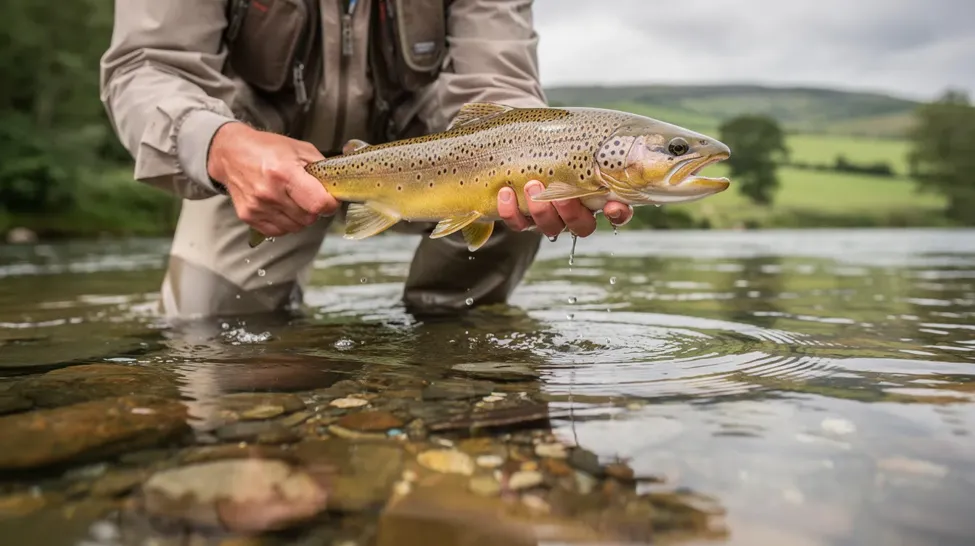
But finances matter. If you’ve ever stared at a tour operator’s website, wondering what on earth you’re paying for, why those two trips cost such different amounts or if there’s some sneaky hidden fee waiting to surprise you at checkout, then this article is for you.
Fly fishing – casting artificial flies with a rod – has its roots in the 2nd century AD, when Roman poet Martial was credited by William Radcliffe as one of the earliest people to write about fishing with fake flies. Since then the sport has come a long, long way – but one thing that’s remained the same over the years is that the financial side of booking a guided trip can be a right old mystery.
This piece is all about cutting through that. I’m going to take you through all the real costs behind fishing travel – whether you’re chasing brown trout on the River Wye or spending a week in a salmon lodge in Canada. I’m going to explain how commissions work, show you the hidden fees and tell you how financial protection schemes operate. Every price, every margin, every scenario is laid out honestly – and that’s how this industry should be run.
What You’re Really Paying for on a Fly Fishing Tour
When you see a day rate or a week-long package price, it’s easy to assume that most of that cash is going into the pocket of the chap with the net. The reality is a bit more complicated.
A typical tour fee covers guiding (the guide’s daily wage and expertise), river access rights or beat rental, boats or vehicles, fuel, permits, public liability insurance, admin costs, marketing expenses and tax. On top of that, quality operators will also chuck in proper tackle – rods ( usually 1.8 metres to 4.5 metres long) coated with plastic to help with casting, waders (3mm thick neoprene) and saltless hooks that are easier on both the fish and the angler. What is the ideal starting rod for a beginner? Well, a balanced 9-foot, 5-weight rod is a good starting point, but stocking a range of spare gear for guests is expensive.
A UK Brown Trout Example
A guided chalkstream day for up to four people on a Southern England beat might cost around £395 per day. At that price, anglers can expect around ten hours of river time with a fully qualified guide, plus flies, tackle, local transport and refreshments. Outside of prime Mayfly season, some beats reduce their prices – a rod on the River Test might cost around £180 per day as opposed to nearly £400 in the peak mid-May to early June period.
An Overseas Fishing Lodge Example
At a salmon lodge in Canada on the British Columbia coast, a five-night, four-day guided trip will set you back around CAD $6,595-about £3,800 to £4,200 depending on the exchange rate. That covers lodge accommodation, guiding, meals and boat time – but fishing licences, drinks and gratuities are extra.
In a well-run operation, a fair chunk of the fee ends up in the guide’s pocket, while another big slice covers lodge overheads (kitchen staff, maintenance, utilities plus the cost of leasing or maintaining river access). Artificial flies can be a few mm to 30 cm long and keeping the right boxes stocked for every species and season is a real expense. The amount left is the operator’s margin – that’s what funds the admin, safety cover and backup plans that keep the whole operation running.
Why Prices Vary So Much Between Fly Fishing Operators
Two operators offering a week’s guided salmon fishing might quote prices that differ by thousands of pounds. Understanding why is key to judging whether you’re getting value for money rather than just the cheapest price.
Destination and Remoteness
A river in the UK that’s easily accessible by train or car is much easier – and cheaper – to run than a remote fishing lodge in Canada, Alaska or Patagonia. Internal flights, fuel for boats and the power needed to run a wilderness lodge all add to the costs. And let’s not forget freshwater species like trout, grayling, and salmon, which each require different tackle and logistics, or saltwater species like bonefish, tarpon and striped bass which demand specialist saltwater fly fishing gear. More exotic targets like arapaima in the Amazon or tigerfish in Africa push budgets higher still.
Species and Season in Saltwater Fly Fishing
A top of the line Mayfly week on a chalkstream can easily set you back double or triple the roof price for the same beat during the shoulder season. Summer sea trout on a Welsh spate river means booking a guide at odd hours – often well into the afternoon, even right into darkness – and you can expect to have to work a bit harder to get out there, or even have to get on a boat to reach your spot. And then there’s the bonefishing trip in the tropics in winter – that one comes with its own added premium too, due to the cost of getting out there and the limited space at those top-notch saltwater lodges.
Group Size and Exclusivity
Booking a trip with a bunch of other anglers and sharing a room is usually the way to go if you want to keep the costs down per head. But then if you book an exclusive beat for just your own group – or even just opt for your very own private hut – you can bet your top rod that you’ll be shelling out a lot more cash per person.
Service Levels
Operators who are serious about giving you the best experience – ie, experienced guides, solid safety cover, backup boats with engines and oars in working order, good grub and well-maintained digs – are going to charge you what they’re worth. Cheap deals are usually the ones that will scrimp on these things and you’ll feel it when you’re out on the water.
The Commission Model In Fishing Travel – How It Really Works
Commission is just part and parcel of the travel industry, but fishing trips aren’t always transparent about how it all works. Now, with fly fishing it’s all about precision – both in the presentation and the casting – and it should be the same with how operators tell you about their finances.
The Standard Model
A lodge or guide will have a net rate – ie, the amount they get to keep after commission – and the tour operator will add their own margin either by tacking on more cash to that net rate or getting a commission from the lodge for bringing in the booking. In a straightforward model, the price the customer pays will be the same whether they book direct or through the operator.
A Worked Example
Let’s say a lodge’s net price for a week is £3,000. The tour operator sells it to you at £3,300 and pockets £300 of that as their commission. You pay £3,300, the lodge gets its £3,000, and the operator gets £300 for their trouble. The thing is, if you were to book directly, the lodge’s own listed rate would still be £3,300.
Where It All Falls Apart
Some agents quietly jack up the prices so they get the difference, while others will get their commission from the lodge and then add on an “admin fee” on top. Both of these practices are technically okay, but they’re also doing it under the table – so if an operator can’t tell you if their price is the same as the lodge’s direct rate, that’s a pretty good sign they’re not to be trusted.
Where Some Operators Hide Their Money – Lack Of Transparency
Now, not every operator in this fishing industry is a complete straight shooter. Since the great Izaak Walton wrote The Compleat Angler in 1653, anglers have always put a high value on being honest – and that’s something the modern booking process should still reflect.
Vague “From” Prices
An operator might advertise a “from price” of £2,000 for a week, but that’s the one that only applies to the lowest-traffic week, in a room shared with others, and without a guide. The week you actually want – in prime season, with a guide, in your own room – is going to be a lot more like £3,200.
The Slow Drip of Extras
You book a £2,000 week in Canada, and then you find out you’ve also got to pay for the fishing licence (~CAD $100), the float plane transfers (~CAD $500 return), tackle hire, and all the other little things at the lodge. The final bill creeps past £2,600. Now none of those costs are outrageous in themselves, but finding out about them at the last minute feels a bit deceitful.
Questions To Ask To Get Some Straight Answers
Before you hand over any cash, make sure to ask your operator these few things:
-
What exactly is included in the quoted price?
-
What’s excluded from that?
-
Are guiding, meals, permits, and transfers included in the deal?
-
Can you tell me about your commission or margin?
-
What financial protection scheme covers my booking?
If the operator gets shifty or defensive when you ask these questions, you might want to think twice about booking with them.
Hidden Fees To Watch Out For (And How To Avoid Them)
Understanding the local fishing regulations before you set off is just as important as being aware of the full cost. And it’s the same with the financial fine print – being aware of the extras can save you a world of trouble.
Common Surprise Costs
-
National fishing licences (like an Environment Agency rod licence in England)
-
Local day permits for specific beats or reservoirs
-
Tackle and fly hire if you don’t bring your own gear
-
Guide tips – norms vary wildly (10% in the UK, 15-20% in North America, and a round-up in Iceland)
-
Boat fuel surcharges
-
Single-room supplements
-
Drinks and extras at the lodge
-
Baggage fees for rod tubes on flights – that one can be a lovely surprise at check-in
Transfers and Internal Travel
Airport transfers and internal flights to remote lodges are frequently left off headline prices – that can add hundreds to the trip cost. If your arrival point and the lodge are a long way apart, ask yourself how you get there and who picks up the bill.
What a Good Quote Should Show
Any decent operator should break it down clearly: how many guided days are included, number of accommodation nights, meals that are included, transfers, permits, equipment and whatnot provided, group size, and cancellation terms – just to name a few. Any costs that are genuinely outside their control – currency fluctuations, permit price hikes – should be flagged, not hidden away.
Our Promise: No Hidden Fees, Ever
You’ve probably made it this far so you can tell why transparent pricing is so important. Alfred Ronalds wrote The Fly-fisher’s Entomology way back in 1836, and that was a pioneering effort in being honest and scientific when it came to matching flies to the actual insects trout eat. There should be a similar spirit of clarity when it comes to how we present costs.
Responsible operators make sure that every possible cost is laid bare right from the quoting stage. A week-long trip outline might read: three days of guided fishing on a sea trout river (that includes the guide, beat access, and boat), two half-days targeting brown trout on a nearby lake (including permit and tackle), five nights’ accommodation with breakfast and evening meals, airport transfer on arrival and departure. If there’s something uncertain, like a licence fee that might change before you visit, they’ll flag it up as an estimate, rather than just burying it.
Credit card fees, vague “handling charges”, and surprise currency surcharges should never pop up on top of an agreed price. If you’re told £2,800, you pay that, simple as. No extras.
Why Financial Protection Matters More Than You Think
Fly fishing trips are a big investment. Whether it’s £1,500 for a long weekend on a Scottish salmon river, or £6,000+ for an adventure at a remote overseas lodge, that’s a lot of cash you can’t afford to lose if something goes wrong.
What Can Go Wrong
Airline collapses. The lodge owner goes bust mid-season. A guide company folds between your deposit and your trip. In all those cases, if your booking is protected through that recognised bonding scheme, your money is safe. If it isn’t, you could lose everything.
The Scale of the Risk
Norway’s got fantastic mountain rivers like the Gaula and Orkla which are pulling in salmon anglers from all over Europe. The River Test in Hampshire is famous for brown trout and commands a premium rate. The River Tweed in Scotland stretches for almost 100 miles and has some of the UK’s most sought-after salmon beats. Bookings on these waters often run into thousands – paid months in advance. Without protection, that’s just sitting in someone else’s bank account, with no safety net.
Understanding Reisegarantifondet, ABTOT & Other Protection Schemes
Reisegarantifondet (Norway)
Reisegarantifondet is the Norwegian fund that protects consumers who book package trips with Norwegian travel organisers. If your operator goes bust, the fund sorts out refunds for any services that weren’t delivered and – if needed – pays repatriation costs. Any Norwegian operator selling package trips has to hold a guarantee with this fund, so make sure you check for it before booking.
ABTOT (UK)
ABTOT (Association of Bonded Travel Organisers Trust) provides the same level of protection under UK Package Travel Regulations. If a bonded operator fails, customers’ pre-paid funds are protected. ABTOT covers land-only packages as well as inclusive ones, provided the operator is a member. Look out for the logo and membership number.
What About Booking Direct?
Iceland’s Lake Thingvallavatn is a popular fly fishing destination, the Amazon River in Brazil offers some really unique fly fishing experiences and Alaska is home to a whole load of different salmon species. All great destinations – but if you book directly with an unbonded overseas lodge or small outfitter that offers no financial protection, and that business fails, you might be left with no way to get your money back. Always check if there is any scheme that covers your payment.
The Real Cost Of “Cheap” Fly Fishing Tours
A heavily discounted week that looks like a bargain often costs you more than a fairly priced trip by the time you get home.
What Gets Cut
Cheap tours tend to cut corners on guide experience, safety gear, boat maintenance, food quality, and insurance. You might find yourself on overcrowded water with too many rods, or with a guide who can’t teach you Spey casting using a longer, heavier two-handed fly rod when the river demands it.
A Real-World Scenario
Picture a cheap saltwater fly fishing trip: you turn up to find the boat engine won’t work properly, there’s no backup tackle and the guide is struggling with the weather. You lose a whole day to mechanical failure – a day that’s just gone, lost to your holiday – and the “savings” of £400 over a reputable operator just disappear. The realisation that you’ve lost irreplaceable fishing time on your holiday, and all because you tried to be so cheap, is a bitter pill to swallow. Then think about a well-run trip where a blown engine means the guide just swaps you into a backup boat and a flood-swollen river just means a shift to an alternative beat or some more productive inland lakes.
Value, Not Just Price
The line between a great trip and a rubbish one rarely comes down to how posh everything is. It’s whether the operator has the know-how, the contacts, and the financial wiggle room to absorb problems and still keep you on the water. A fantastic week isn’t about the thread count on your sheets – it’s about the time you spend on the water.
How To Read A Fly Fishing Tour Quote Like A Pro
Check the Dates and the Time of Year
If the price says “from £X”, find out which week that’s applicable to. The best fly fishing usually happens during a hatch, and the hatches have very specific timing. Outside those windows, the fishing – and the price – will change. If a trip promises dry fly action but takes place during a week when there are no hatches, you’re getting poor value at any price.
Count the Guided Days
Are all days guided, or just some of them? And how many guys per guide? A 1:2 ratio is a lot better than 1:4 when you’re trying to target a specific species in tricky conditions.
Food & Accommodation and Extras
Is it full board or are you self-catering? Is there a supplement for having a single room to yourself? Are drinks included or are you expected to pay for them too? If you’re starting out it might be simple to get by with just a few key fly patterns, but if flies and leaders aren’t included, you’ll need to factor that into your budget.
Do a Like for Like Comparison
Get three quotes from different operators and compare them not just on price, but on guide ratios, safety cover, how long the trip takes, and whether the timing is right for the species you want to go for. It might be that a slightly more expensive trip puts you on the river at the peak time for sea trout or salmon – and that’s worth a lot more than a cheaper week at the wrong time of year.
The Financial Benefits Of Experienced Flyfishing Tour Operators
Operators who’ve spent decades on the water, from the chalk streams of southern England to the remote salmon rivers of Norway, save you money in ways that never even show up on your invoice.
Fly fishing is all about reading currents and understanding how insects behave. The goal is to get the fly to float naturally on the surface of the water. Operators who really get this sort of thing know exactly when to send you to the right spot, which beat to book in at and which guide will be right for you. That knowledge means you’re not throwing away days, you’re getting the timing right and you’ve got realistic expectations.
They also have long-term relationships with the best lodges and guides – including partners at a top salmon lodge in Canada that usually delivers good fishing and fair prices. Those relationships mean you can always get a reliable booking, get priority access to the best water and get some really honest advice beforehand about whether the conditions are right for a good trip or not.
Why Book With Operators Like KD Flyfishing Tours?
KD Flyfishing Tours is run by people who actually fish, not just by marketers who’ve read up on the basics. The guys who run the show are all experienced anglers who’ve spent years on the water in the UK, Europe and North America. They bring that same commitment to simplicity, to getting back to basics and really understanding the water into every trip they plan.
What does that mean for you? It means you get honest advice on whether a destination is right for you. It means no sugarcoating about catch prospects – just brutal honesty – and about the wider setting, whether that’s a quiet week in southern England or a more remote week when the fishing is the only thing that matters. It means you get help choosing between a trip on the River Wye, a Scottish salmon trip or a New Zealand adventure, based on what will actually deliver for you in terms of budget, ability and time off.
Booking with specialists like KD is usually no more expensive than going direct, but you do get expertise, security and someone who’s got your back if things go wrong. That’s the middle ground between overpaying and taking a risk.
Finding The Right Trip For Your Budget, Your Species and Your Experience – Getting The Best Value
Start With Three Basic Questions
What’s your budget? What species do you want to go after? And when can you get away? Answer those first, and I reckon the right trip will tend to sort itself out.
Seasonal Sweet Spots
Early June sea trout in Wales is a great time, as is April dry fly on chalk streams – its late summer salmon in Norway and Autumn still water trout on uk reservoirs that really offer something at lower prices. Fly anglers often catch unintended species like chub and bream when conditions change – which can be a real nuisance – but a good guide is worth their weight in gold when those surprises come along – and they can turn them into memorable moments that you’ll be talking about for years to come.
Where to Spend and Where to Save on Your Fly Fishing Trip
Look, investing in good guiding and reliable logistics is what counts – I mean unless you’re a total expert, you don’t need to go all out on a luxury lodge or a bunch of extras. Pick a good, modestly priced trip – three days on a productive river with a decent guide and some basic food – that kind of thing can be a lot more exciting than a 5 star resort where you end up fishing a pool that’s dead.
Staying in a hut beside a lovely forest stream can be just as good as a fancy resort that happens to be empty. Bring some mates with you to split the costs – you could get a solid week on some less fashionable but perfectly productive water. And it’s always worth asking if a shorter, better-timed trip might be a better value than a longer one in a marginal window.
DIY Flyfishing Travel Compared to Hosted & Fully Guided Tours
You’ll save cash if you go it alone and sort it all out for yourself – flights, car hire, fuel, accommodation, and licenses – but let’s be real – unless you really know the local area and have a tight schedule, you’ll end up losing days to unproductive beats and getting stuck somewhere that’s not what you thought it was.
When DIY Makes Total Sense
If you’re returning to a river you know inside out with some mates who have fished it before and you’ve got the time to take it easy and enjoy the trip without a tight schedule, then DIY is a great choice. If you’re one of those experts who can read water, tie on the right fly, and adapt to changing weather – then a DIY trip can be a lot of fun. A self-guided week on a lake you know like the back of your hand or a beat you’ve fished for years is a pretty cost effective option.
When Hosted Tours Are Worth Every Penny
If you’re heading to an unfamiliar destination – whether that’s a sea trout river in Wales, a salmon system in Scotland, or a fly fishing lodge in Canada – a hosted tour removes all the guesswork. The folks running the tour have picked the dates, secured the best available water, and sorted out all the details from start to finish. And that leaves you free to fish. Now I know some people will say – a solo week chasing sea trout with a bit of local knowledge isn’t really the same as a hosted trip with expert guiding on top-notch water – and you’re right, it isn’t.
Putting It All Together – A Checklist Before You Book
The main takeaway here is to think about what you’re really paying for – guiding, access, tackle, food, safety and fair margins for the people doing the work – and make sure you understand what all that cash is buying.
Ask plenty of questions about what you get and what you don’t – commissions, inclusions and exclusions and all that malarkey. Make sure you’re protected in case things go wrong – like if they need to cancel at the last minute – and check out their terms of cancellation and what they reckon you’ll catch.
Don’t compare prices on price alone – guide ratios, specific timing and backup plans matter a lot more than just getting the cheapest option.