
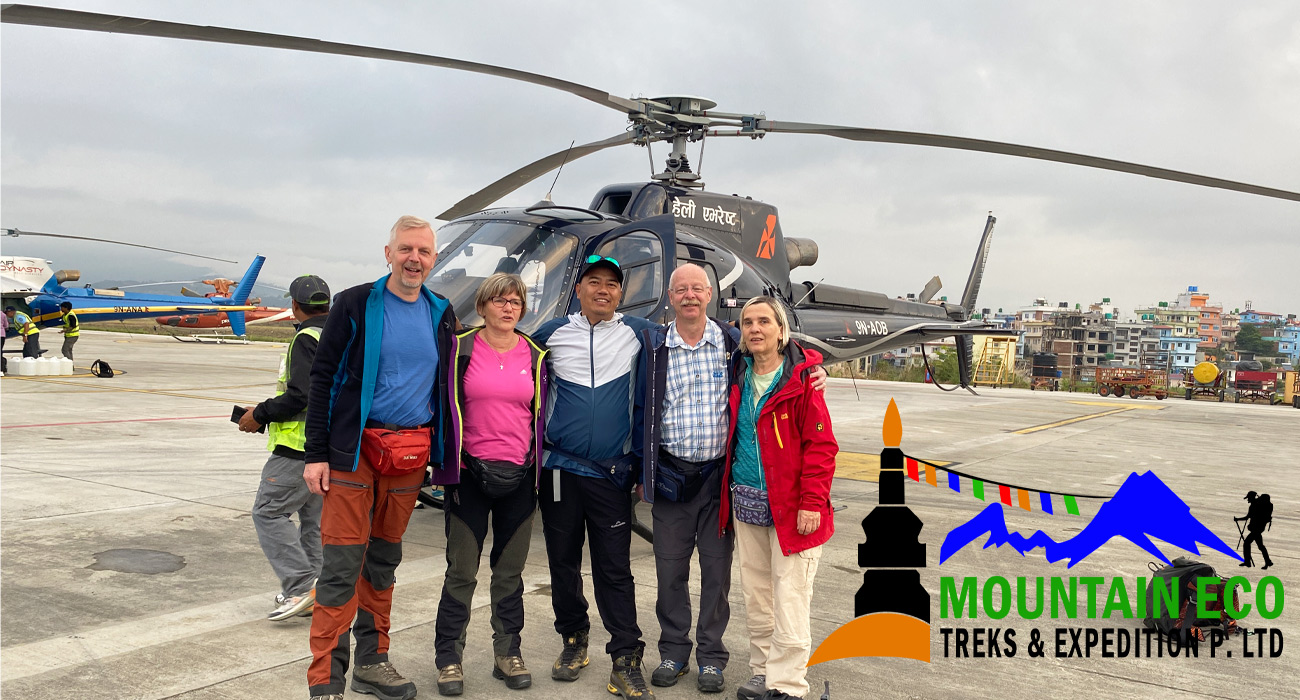
 A journey to Everest Base Camp can change the way you think about distance, comfort, and time.
At home, a short walk may seem easy. In the Himalayas, a simple climb can take much more effort. A warm room can feel special after a cold day outside. Even a quiet cup of tea can become a moment you remember for years.
The Everest Base Camp Trek With Helicopter Return gives travelers the chance to experience these changes firsthand. You walk through the Khumbu region, spend time at high altitude, reach Base Camp, and then return through the mountains by helicopter when conditions allow.
The route offers more than beautiful views. It can also teach you a few things about yourself.
The Mountain Teaches Patience
One of the first lessons on the trail is that you cannot control everything.
You may have a plan for the day, but the trail, weather, altitude, and your own energy can change that plan.
Trying to fight every delay only makes the experience harder.
Progress Does Not Have to Be Fast
On a mountain trail, slow progress is still progress.
You may take several minutes to climb a section that would normally take you much less time at home. That is perfectly fine.
The important thing is to keep a steady rhythm instead of wasting energy trying to move too quickly.
Comfort Starts to Mean Something Different
A hot shower, soft bed, and fast internet may seem normal in everyday life.
After a long day of trekking, your idea of comfort can become much simpler.
A warm meal and a dry place to rest may be enough.
Small Things Become Valuable
A pair of dry socks can feel like a luxury.
So can a warm drink after walking in cold wind.
These simple moments remind you how many things you normally take for granted.
The mountains have a way of making ordinary comforts feel special again.
You Learn to Watch the Weather
Mountain weather deserves attention.
The sky can change while you are still walking. Sun, wind, clouds, and cold temperatures can arrive much faster than expected.
This means checking conditions is not just a routine task.
Clouds Can Change the View
A mountain peak may be clearly visible one minute and hidden behind clouds soon after.
Instead of being disappointed, you learn to wait.
Sometimes the clouds move away and reveal a view that feels even more dramatic because you had to wait for it.
That unpredictability is part of mountain travel.
Your Body Becomes Your Best Guide
Fitness helps on a trek, but it does not tell the whole story.
Altitude can affect even people who are very active.
You may discover that your usual pace no longer works once you reach higher elevations.
Listen to What Your Body Says
Feeling tired after a long day is normal.
But unusual symptoms should not be ignored.
Rest when needed and tell your guide if you feel unwell. Following proper acclimatization is more important than sticking stubbornly to a timetable.
The mountain does not care how fit you were before arriving.
The Trail Changes Your Idea of Distance
Maps can make mountain routes look simple.
Two points may seem close together, but steep slopes, rough paths, altitude, and frequent climbs can make the journey much longer than expected.
The Everest Base Camp Trek With Helicopter Return gives you a chance to experience that difference between looking at distance and actually traveling through it.
You Start Thinking in Landmarks
Instead of counting every mile, you may start thinking about the next village, bridge, rest stop, or viewpoint.
This makes a long day feel easier to manage.
You focus on what is directly ahead instead of worrying about the entire route.
You Begin to Notice Other People
A trek brings you close to people from many different places.
You may share a dining room with travelers who speak different languages and come from completely different backgrounds.
Everyone has the same basic goal: keep walking and reach the next stop.
Shared Effort Creates Easy Conversations
A difficult climb can become a conversation starter.
People talk about where they started, how they are feeling, or what they hope to see next.
You may never meet these people again, but a short conversation on the trail can become part of your memory of the trip.
The Mountains Encourage You to Look Up
Daily life often keeps your attention close to a screen, road, or schedule.
The Everest trail gives you plenty of reasons to look away.
There may be a giant peak above you, a deep valley beside you, or a line of prayer flags moving in the wind.
Not Every Moment Needs a Photograph
It is easy to reach for your phone every time the scenery changes.
But sometimes it is better to simply stand still and look.
The view does not need to be saved to be meaningful.
Some moments are better remembered through how they felt rather than how they looked on a screen.
Reaching Base Camp Feels Different After the Long Walk
Everest Base Camp is the main goal for many trekkers.
But its meaning comes from the days before it.
You have already crossed bridges, walked through villages, climbed steep sections, dealt with cold weather, and adjusted to higher elevations.
The Destination Carries the Journey With It
When you finally arrive, you are not just standing at another location.
You are standing at the end of a challenge that required patience and consistency.
That is why the moment can feel much bigger than a photograph suggests.
The Helicopter Creates a Sudden Change
The Everest Base Camp Trek With Helicopter Return offers an unusual contrast.
For days, your movement depends on your feet.
After reaching Base Camp, you can rise into the air and cover the same region much faster, provided flight conditions are safe.
The View Becomes Wider
From the trail, mountains often surround you.
From the helicopter, the landscape opens up.
You can see valleys stretching into the distance, villages sitting between slopes, and trails winding through terrain that looked much larger while you were walking.
The change in perspective can be striking.
You Learn That Plans Need Room to Change
A helicopter return can save time, but mountain travel always comes with uncertainty.
Weather and visibility can affect flights.
That is why a smart itinerary should have some breathing room.
Do Not Build a Fragile Schedule
If you have an important flight after the trek, allow enough time for possible delays.
A flexible schedule gives you options.
A tight schedule leaves you with problems if even one part of the journey changes.
That is true for mountain travel and, honestly, for most travel.
What the Mountain Leaves Behind
The Everest Base Camp Trek With Helicopter Return can give you more than photographs and a story about reaching Base Camp.
It can teach you to move at a slower pace, accept changes, respect your limits, and appreciate things that normally seem ordinary.
The walk gives you time to experience the mountains closely. The helicopter return then lets you step back and see the larger picture.
You leave the Everest region with more than the memory of a famous peak. You carry the small lessons from the trail—the value of patience, preparation, flexibility, and simply paying attention.
That may be the most lasting part of the journey.
Frequently Asked Questions
Is the Everest Base Camp trek only physically challenging?
No. The trek also requires patience, mental focus, careful pacing, and the ability to adapt to changing conditions.
Why is altitude important during the trek?
Higher elevations have thinner air, which can make physical activity harder. Proper acclimatization and sensible pacing are important.
Can weather affect the helicopter return?
Yes. Helicopter operations depend on safe weather and visibility, so delays can occur.
Is it better to walk slowly on the trail?
A steady, comfortable pace is generally more useful than trying to walk as fast as possible, especially at higher elevations.
What makes the helicopter return memorable?
It changes your perspective completely. After experiencing the mountains on foot, you can see the valleys, villages, and trails from above.