
First-time travel can feel overwhelming, yet a handful of practical steps turn uncertainty into confidence. Whether heading domestically or internationally, preparation around documents, money, packing, and awareness prevents common setbacks and allows the focus to stay on enjoyment. These ten essential tips, drawn from widely recommended practices, help beginners navigate the process smoothly from planning through arrival and beyond.
1. Verify Passport Validity and Visa Requirements Early
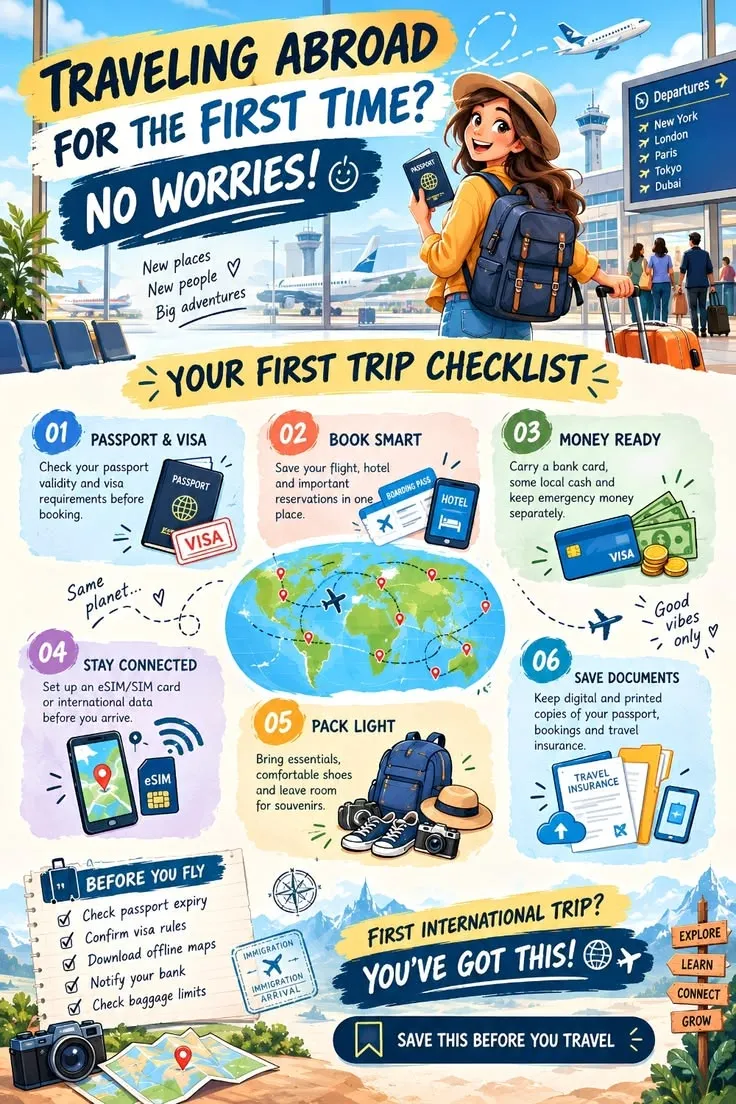
Many destinations require a passport valid for at least six months beyond the planned return date. Check expiration well in advance and renew if needed, as processing can take several weeks. Research visa or electronic travel authorization rules for the specific country and nationality. Apply early if a visa is required to avoid last-minute complications that could delay or cancel plans.
2. Research the Destination Thoroughly
Understanding local customs, laws, weather patterns, and practical details reduces surprises. Learn about dress expectations at religious or cultural sites, common scams, food and water safety, and any required or recommended vaccinations. Note currency practices—some places rely heavily on cash—and typical costs for transport, meals, and activities. This background supports respectful interactions and realistic budgeting.
3. Purchase Travel Insurance
Comprehensive travel insurance provides protection against medical emergencies, trip cancellations, lost luggage, or other disruptions. Review coverage carefully to understand what is included, especially medical care abroad and evacuation if needed. Securing a policy early offers peace of mind and can prove valuable if unexpected events arise.
4. Notify Banks and Prepare Payment Options
Contact banks and card issuers before departure to inform them of travel dates and destinations. This prevents cards from being frozen due to unusual activity. Carry at least two cards from different institutions, stored separately. Bring a modest amount of local currency or widely accepted cash for immediate needs, as not every vendor accepts cards. Avoid relying solely on one payment method.
5. Create Copies of Important Documents
Make both physical photocopies and digital versions of the passport, visas, insurance details, itinerary, and key contacts. Store digital copies in cloud storage accessible offline and keep physical copies separate from the originals. Share a set with a trusted person at home. These backups speed recovery if documents are lost or stolen.
6. Pack Light and Organize Smartly
Overpacking creates unnecessary stress and potential baggage fees. Focus on versatile clothing suitable for the climate and planned activities. Use packing cubes for organization. Keep essentials—medications, a change of clothes, chargers, documents, and valuables—in a carry-on bag in case checked luggage is delayed. Check airline baggage allowances and liquid restrictions in advance. Include a universal adapter and portable charger where relevant.
7. Download Offline Tools and Learn Basic Phrases
Before leaving, download offline maps of the destination area and language packs for translation apps. These remain useful without constant data or Wi-Fi. Learning a few key phrases—hello, thank you, please, and directions—shows respect and often eases interactions even if English is widely spoken. Confirm any international phone or data plan, or arrange a local SIM or eSIM for reliable connectivity.
8. Plan Airport Arrival and Know Procedures
Arrive at the airport with ample time—typically two to three hours for international flights—to allow for check-in, security, and unexpected delays. Complete online check-in when available to streamline the process. Familiarize yourself with security rules regarding liquids, electronics, and prohibited items. Keep boarding passes, identification, and other documents easily accessible.
9. Share Itinerary and Maintain Safety Awareness
Leave a copy of the itinerary, accommodation details, and contact information with someone at home. Register with relevant government traveler programs if available for destination alerts. Stay aware of surroundings, especially in crowded areas, and use secure bags that stay close to the body. Avoid displaying large amounts of cash or valuables. Trust instincts and have emergency numbers saved, including local emergency services and the nearest embassy or consulate.
10. Build in Flexibility and Start Simply
First trips benefit from realistic expectations and some buffer time. Avoid overly packed itineraries that leave no room for rest or unexpected discoveries. Choose destinations or itineraries that match comfort levels—starting with places that feel manageable builds confidence for future adventures. Stay open to adjustments if plans change due to weather, transport, or personal energy.
These steps form a solid foundation for first-time travelers. By addressing documents, finances, packing, connectivity, and basic safety in advance, the journey becomes less about logistics and more about experience. Preparation reduces stress and creates space to appreciate new places, people, and moments. With these essentials covered, first-time travelers can step forward with greater assurance and focus on making lasting memories.
Read more- marathimeanings.com